Information and Public Relations Directorate
E-mail: presamapn@mapn.ro
Contact: 021-319.60.22
International Doctrinal Conference " Gândirea militară românească "
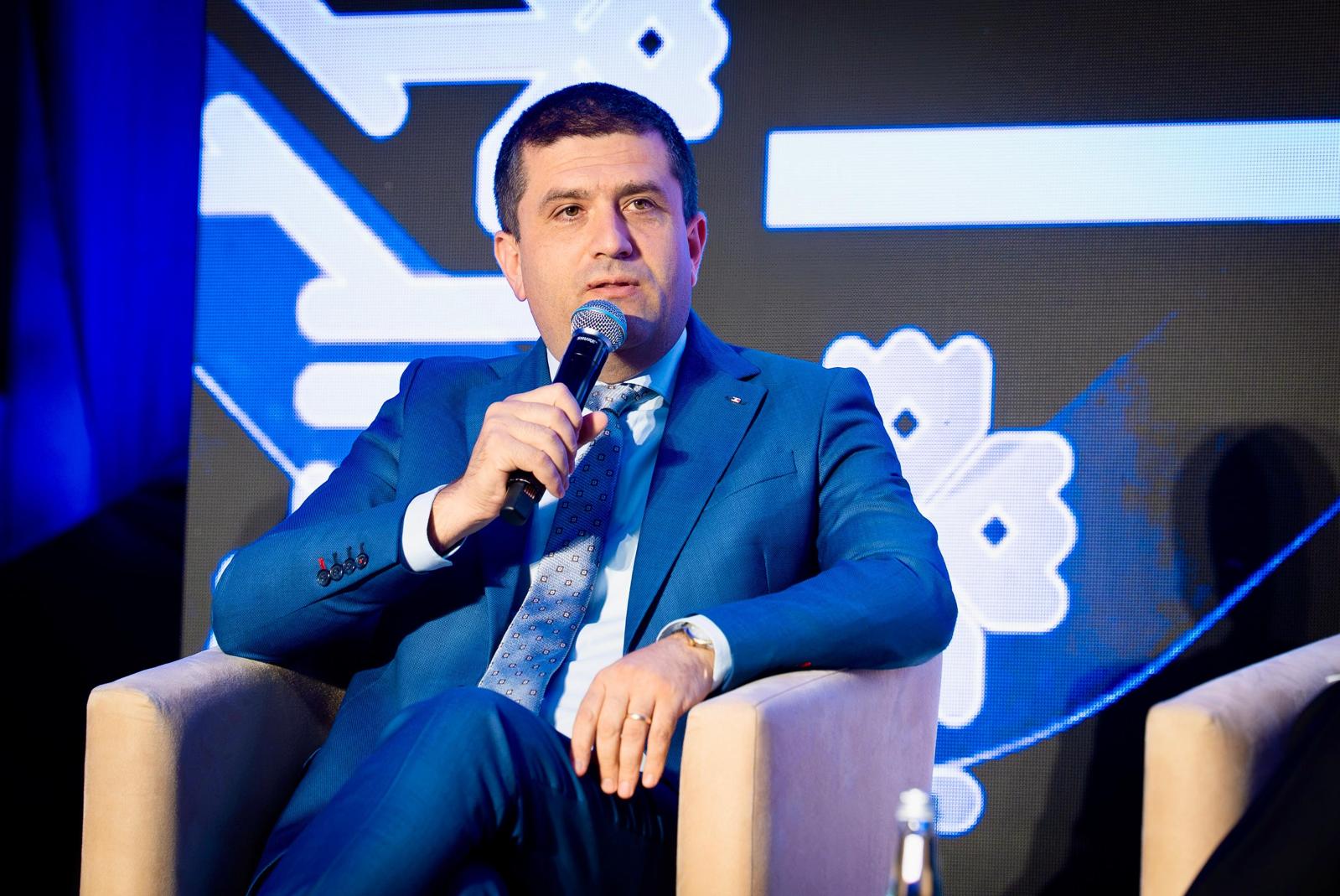
The 8th edition of the international doctrinal conference " Gândirea militară românească " - held from November 18–19 at the Palace of the National Military Circle in Bucharest under the theme "2045 Defense Timeframe: Strategies, Technologies, and Decisions in an Era of Global Reconfiguration" - brought together Romanian and foreign officials, NATO representatives, military leaders, members of the diplomatic corps, security and defence experts, as well as specialists from academia and the defence industry.
Organized by the Defence Staff, the conference featured high-level international participation, including representatives from NATO command structures and the military leadership of allied nations. Attendees included Lieutenant General Peter Scott, Deputy Commander of Allied Joint Force Command Naples; Major General Viktor Kalnitski, Deputy Chief of Defence of Estonia; and Lieutenant General Krzysztof Król, Advisor to the Chief of Defence for Transformation (Poland). The presence of the Ambassadors of Estonia, Germany, Greece, Spain, and Ukraine, alongside representatives of central Romanian state institutions, emphasized the relevance of the topics approaching regional and Euro-Atlantic security.
The official opening of the conference was delivered by Lieutenant General Dragoș Iacob, Deputy Chief of the Defence Staff.
Structured around two major thematic tracks - "Strategic Environment and Global Security" and "Capabilities, Technologies, and Resilience"—the conference proceedings focused on analyzing current security challenges and identifying development paths for national defence with a view toward year 2045.
Discussions on the first day addressed the evolution of the international security environment, NATO’s perspectives on the Eastern Flank, and forms of aggression occurring below the threshold of armed conflict. A central focus was placed on lessons learned from the war in Ukraine -specifically the transformations on the battlefield driven by the use of drones, emerging technologies, and modern surveillance and strike systems - as well as the implications of these factors for the planning and conduct of military operations.
The second day was dedicated to the armed forces’ transformation and the development of capabilities required to address future threats. Discussions focused on adapting military planning processes, developing the defence industry, leveraging dual-use technologies, mobilizing strategic resources, and strengthening the capacity to sustain defence efforts.
Special attention was given to civil-military relations, democratic resilience, and the preparation of future generations of military leaders. The panels also examined the implications of geopolitical shifts for political-military decision-makers, as well as the need for institutions and society to adapt to an increasingly complex security environment.
The conference program featured 14 thematic panels, academic sessions, and debates led by Romanian and international experts from military institutions, universities, research centers, and strategic analysis organizations. The event also included an awards ceremony for the journal “Gândirea militară românească”, acknowledging contributions to the advancement of scientific research and military theory.
With its broad international participation and wide range of perspectives, the conference served as an opportunity for strategic dialogue and the exchange of expertise regarding the adaptation of armed forces to the current and future realities of the security environment. The topics addressed highlighted the importance of developing military capabilities, enhancing cooperation among allied nations, and strengthening national resilience - all of which are essential for ensuring Romania’s security and defence.
The Press Office