

Information and Public Relations Directorate
E-mail: presamapn@mapn.ro
Contact: 021-319.60.22
The Ministry of National Defence delegation, at the NATO Summit Defence Industry Forum (NSDIF)
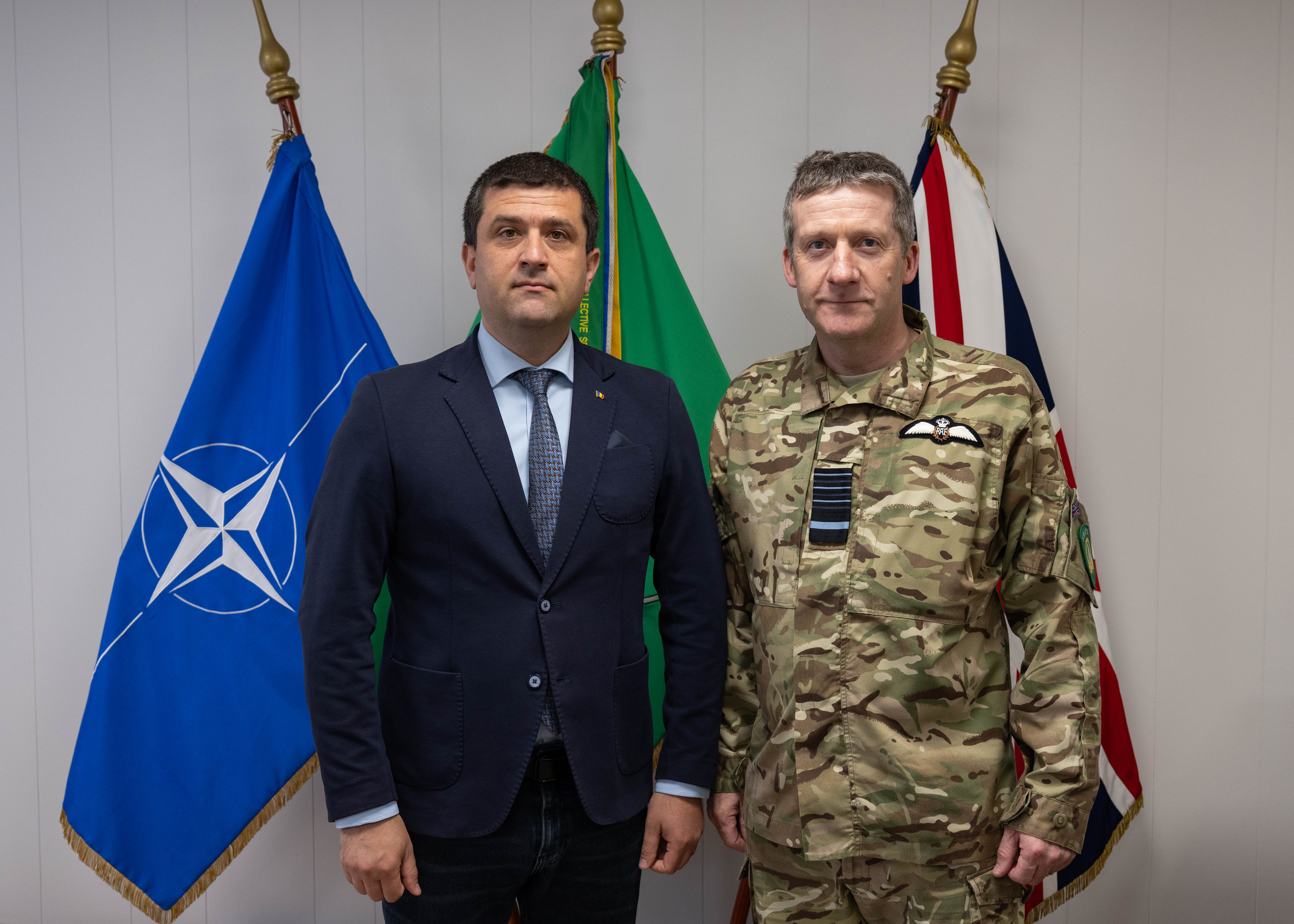
As part of the NATO Summit in Ankara, the MoND delegation led by Minister of National Defence, Radu Miruță, participated on July 7th in the NATO Summit Defence Industry Forum (NSDIF). The event served as a backdrop for a series of gatherings and signing ceremonies for Memoranda of Understanding regarding multinational cooperation projects and programs.
At the opening of the working sessions, the officials announced iAFSC (Alliance Future Surveillance and Control – GlobalEye) Program - NATO’s future early warning platform - an initiative that Romania has also joined.
During the forum, the Minister of National Defence participated in a signing ceremony for Memoranda of Understanding on two high-profile projects in the field of Integrated Air and Missile Defence (IAMD): Air Defence Capabilities Against Lower-Level Air Threats and Passive Air Surveillance Capabilities. The aim of these projects is to facilitate multinational cooperation among Allies for the joint procurement of IAMD capabilities in order to accomplish the undertaken commitments.
Furthermore, the Minister of National Defence signed the updated memorandum for the high-visibility NATO Flight Training Europe (NFTE) Project, following the accession of France, Finland, and Sweden to the program. The program provides for the training of pilots for fighter aircraft and helicopters, as well as for drones, in the context of the NATO Drone Edge initiative launched at the NSDIF.
Procurement coalitions were announced during the NSDIF, and the Chief of the Defence Staff signed the Framework Declaration on Multinational Procurement Coalitions - an initiative that will facilitate joint procurement with other Allies. In this context, Romania joined the Specific Coalition for the Naval Strike Missile and Joint Strike Missile, alongside the USA, the United Kingdom, and Norway.
***
An integral part of the NATO Summit, the NSDIF is a major event dedicated to transatlantic defence production, investment, and innovation. It brought together high-ranking officials from NATO, allied and partner nations, defence industry leaders, and representatives from innovation communities to boost industry and to identify solutions to the most current pressing security challenges.
The iAFSC (Alliance Future Surveillance and Control) program is NATO’s initiative to replace the current Boeing E-3A Sentry AWACS aircraft fleet with a modern surveillance architecture combining airborne platforms, space-based sensors, ground systems, and unmanned capabilities. Allies are taking a significant step forward through the joint acquisition of up to 10 Saab GlobalEye aircraft (Swedish-Canadian), which will constitute NATO’s future surveillance and control capability. This system will succeed the Boeing E-3A (based on the Boeing 707 platform), offering significantly enhanced capabilities for the coming decades—specifically, simultaneous surveillance across air, maritime, and land domains from a single platform. GlobalEye is a system that has already demonstrated its ability to detect, track, and identify complex threats, including drone swarms, ballistic missiles, and cruise missiles. The decision to select GlobalEye as NATO’s new AWACS was based on capability, affordability, and rapid delivery. It remains a transatlantic program, coordinated at European level and featuring significant contributions from the US industry. Belgium, Canada, Denmark, Germany, Latvia, Lithuania, Luxembourg, the Netherlands, Norway, Romania, and Sweden have joined this project.
The NATO Drone Edge initiative entails allocating over $40 billion in funding for the procurement of counter-drone systems over the next five years. Additionally, a marketplace platform will be launched, enabling allies to access contracts already signed by NATO agencies or other Allies for the purchase of C-UAS systems. Another objective of the program is to increase the number of drone pilots fivefold by the end of 2027.
The Air Defence Capabilities Against Lower Level Air Threats program aims to develop and strengthen capabilities designed to counter low-altitude air threats—specifically unmanned aerial systems, loitering munitions, and other targets operating at low altitudes (i.e., threats flying below 150 meters). The initiative facilitates cooperation among Allied nations with a view to developing interoperable solutions for detecting, identifying, and neutralizing these threats, thereby contributing to the strengthening of the Alliance's integrated air defence and enhancing the resilience of the Eastern Flank.
The Passive Air Surveillance Capabilities program aims to develop modern passive air surveillance capabilities based on sensors that detect and track aerial targets without emitting their own signals. These systems complement the existing air surveillance network, enhance early warning capabilities, and improve air situational awareness, including with respect to the low radar signatures - aircraft or drones.
The Press Office